From Pots & Pans to Progressive Precision

It started with pots and pans
Waltteri Väyrynen was three, maybe four years old, when he started making noise in the kitchen with pots and pans — just playing around, like kids do, even if it got on his parents’ nerves. His stepfather had a drum kit, and by five Waltteri was behind it. By twelve he had his own. And from that point on, the practice sessions ran five, six hours a day — every day — driven by a single, clear ambition: become the fastest drummer in the world. What followed was something even greater.
Chasing speed, finding feel
Growing up in a house where metal was the default soundtrack, Waltteri's earliest heroes were exactly who you'd expect: Hellhammer from Mayhem. Nick Barker from Cradle of Filth. The extreme end. The guys who played like the instrument owed them money.
"As a teenager I wanted to be the fastest drummer in the world, that didn't go down so well."
He laughs about it now. But the ambition wasn't wasted — it built a foundation of speed, endurance, and double-kick fluency that would serve him for the rest of his career. First in Paradise Lost, where he spent seven and a half years. Then playing with Bloodbath, Bodom After Midnight, Amorphis, and Moonsorrow. And eventually, in 2022, in Opeth — the band that would demand everything he had and then ask for more.
The thing about progressive metal is that speed alone doesn't get you through a set. Opeth songs shift from crushing aggression to near-silence within bars. There are passages that require blast-beat intensity followed immediately by ghost-note subtlety. And for this kind of music, the hardest part isn’t the heavy playing. It’s everything in between.
"One of the hardest things is knowing when to calm down – when not to overplay. Especially live, when you're in the zone and you just want to play a little bit more than the song requires."
Over the years, his playing philosophy crystallized into something deceptively simple: dynamics and groove always come first. And with that approach came recognition as one of the most technical drummers of his generation — something he’s notably humble about.
"You don't have to be the most technical drummer in the world, as long as every hit matters."
Building the kit
If Waltteri's playing evolved over years of trial, restraint, and discovery, his drum kit followed the same path. The kit in front of him today isn't something he ordered from a catalog. It's the result of a long, deliberate search — adding things, removing things, trying combinations, refining preferences — until every piece earned its place.
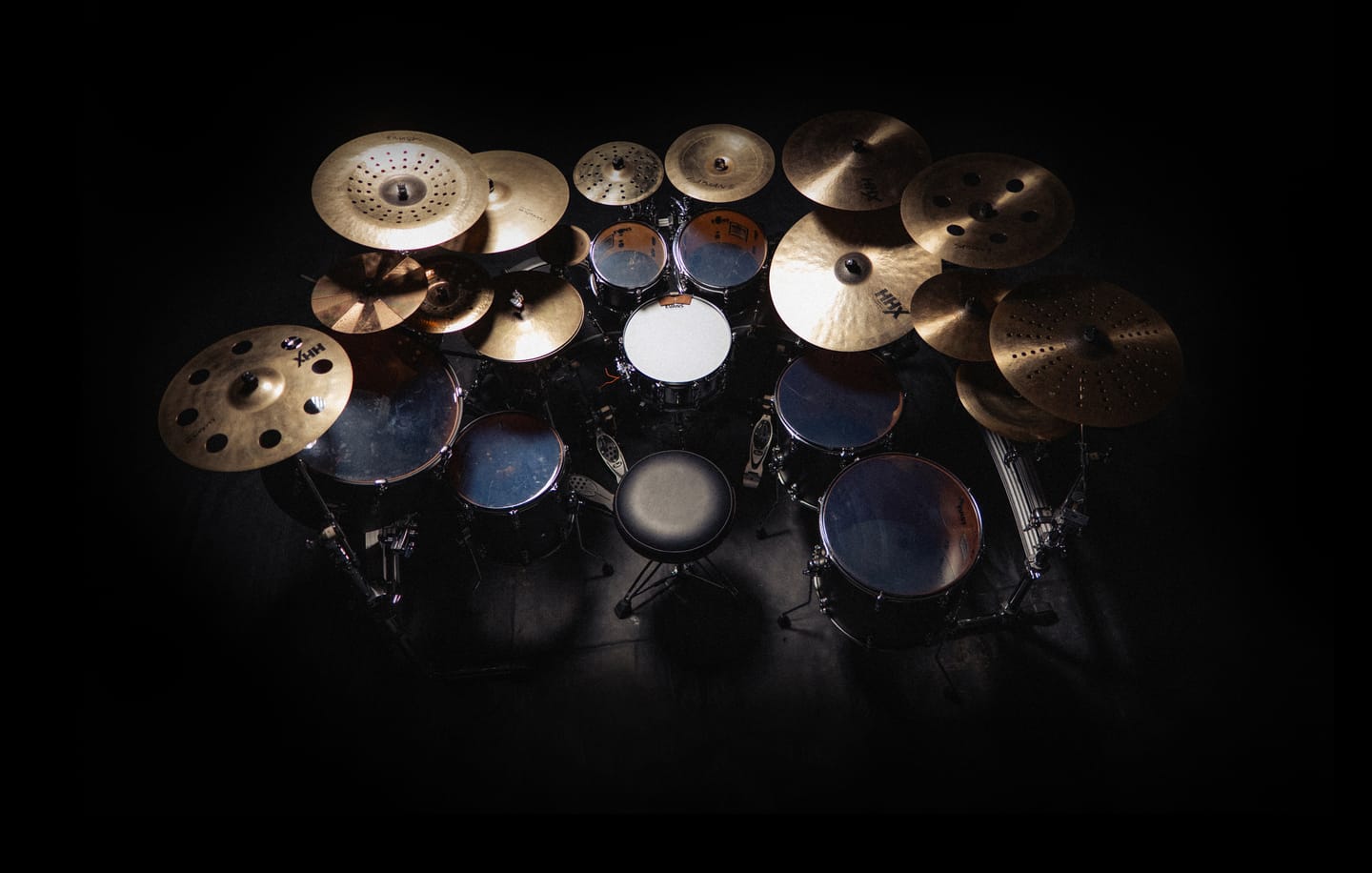
The foundation is a Pearl Reference Pure kit. One of the last ones manufactured before the series was discontinued. Waltteri got his hands on it just before recording Opeth's The Last Will and Testament, and from the first session, everyone in the room knew it was the right kit. Producer Stefan Bowman. Mikael Åkerfeldt. Waltteri himself. The shells — a mix of mahogany, birch, and maple in different ply configurations depending on the drum size — deliver something rare: fierce low-mid impact that still retains nuance for the quietest ghost notes.
"I couldn't wish for a better kit for this kind of music, from the softer parts to the most aggressive, heaviest parts where you really need precision and attack — it does everything."
But the kit isn't just shells. It's the complete ecosystem around them. And every piece tells a story.
Most metal drummers use a double pedal on a single kick drum. Waltteri uses two separate 22-inch Pearl Reference Pure kick drums — and he likes them not sounding identical.
"I love that. That slight difference makes it feel organic. Alive."
They're even tuned slightly differently. It's a deliberate choice that trades mechanical precision for something more human. In Addictive Drums 2, this setup takes full advantage of the alternating kick functionality, eliminating the robotic "machine gun" effect that plagues so many programmed double-kick patterns.
The beaters matter too. Waltteri uses Pearl Eliminator quad beaters — four-sided options ranging from felt to plastic — and for this session, he chose felt. The result: fat, punchy, with a nice amount of precision, but never clicky. Attack without artifice.
Sampling a life's work
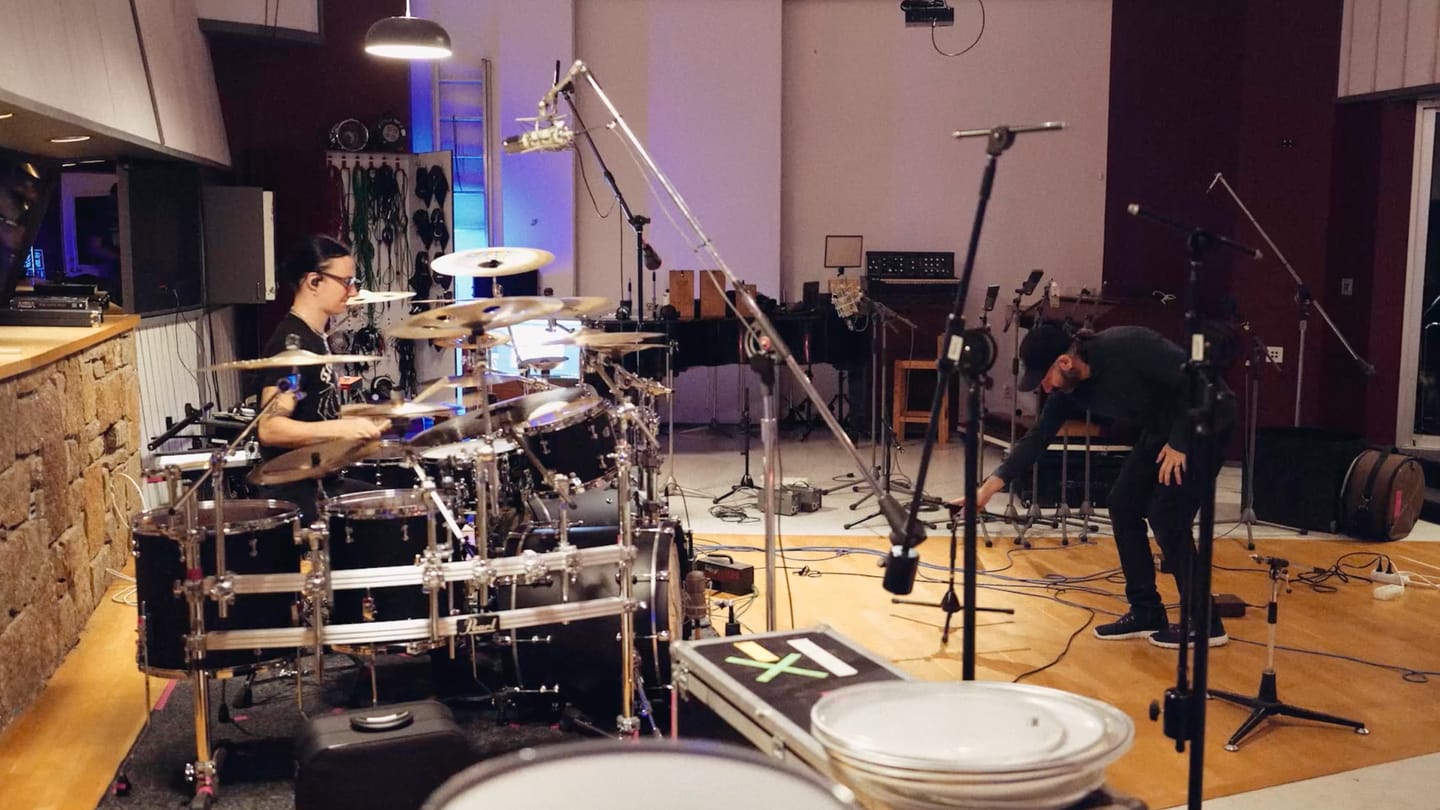
For all his years behind the kit, Waltteri had never made a sample library before. The process both surprised and impressed him. Every hit was played by him — because his touch is a defining part of the sound. From the lightest ghost notes to rimshots that cut through a mix, every nuance was captured. Each drum was recorded across multiple layers and velocities, a painstaking process of graduating through dynamics to make the final result as natural as possible.
"From the lowest of the lowest ghost notes until the heaviest rimshots that one could ever imagine playing, it's all there, we spent quite a lot of time and effort getting all of those done."
The result is a pack that doesn't just sound like Waltteri's kit. It responds like it. The sensitivity of the steel snare. The organic wobble between the two kicks. The way the toms sing at medium tuning with enough rebound to let the sticks breathe. It's all captured — not as a flat collection of samples, but as a playable instrument with the same dynamic range and personality as the original.
Forty-eight presets round out the package, crafted by a roster of producers and musicians who understand progressive metal from the inside: David Castillo, Jaime Gomez Arellano, Lawrence Mackrory, Thomas 'Plec' Johansson, plus Opeth's own Fredrik Åkesson and Waltteri himself. The presets span the full width of the genre — from dynamic, open 70s-influenced prog tones to modern, hard-hitting metal.
The MIDI pack: Captured Performance
Alongside the ADpak, the Progressive Metal Beats & Songs MIDIpak captures something no sample library alone can: how Waltteri actually plays.
Over 390 MIDI files with progressive grooves, blast beats, double-kick patterns, expressive fills, odd-meter signatures, and full song structures — all performed live by Waltteri. There are beats that start on hi-hats and migrate to crashes and floor toms. There are templates for entire songs with verse-chorus structures ready to be dropped into a session and reshaped.
The idea that someone could take his patterns and build something entirely new from them clearly excites him.
"It's almost like a collaboration, and that's the biggest honor — people using my drum patterns to write new music."
Full circle
At the end of our conversation, Waltteri contemplates on what it feels like to join the bands he grew up listening to — first Paradise Lost, now Opeth. Playing songs he practiced to as a teenager. Sitting behind the kit on parts he used to air-drum in his bedroom.
"Surreal. Still surreal. That's something I could only dream of as a kid."
And now another turn in the circle: the kid who played along to his heroes' records has become the drummer whose playing lives inside other's music. A life's work, captured in full, and unlocked for the first time.
The Progressive Metal ADpak and Progressive Metal Beats & Songs MIDIpak are available now for Addictive Drums 2


